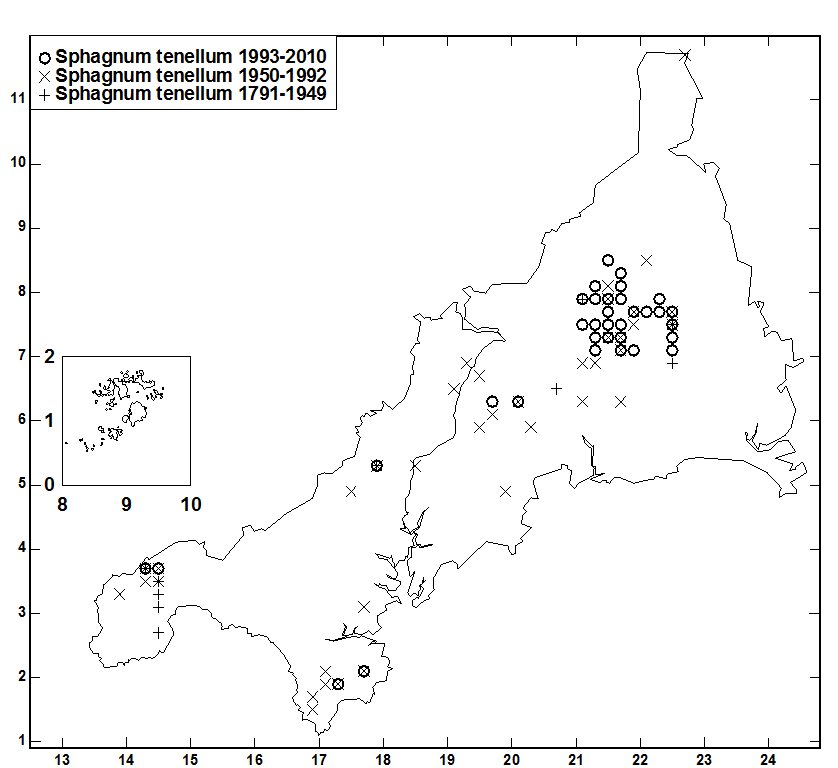
*1: Madron Moor, 1867,
WC (PNZ) (Paton 1969a: 708).
*2: St Cleer, 1920, RWS
(EXR) (Paton 1969a:
708).
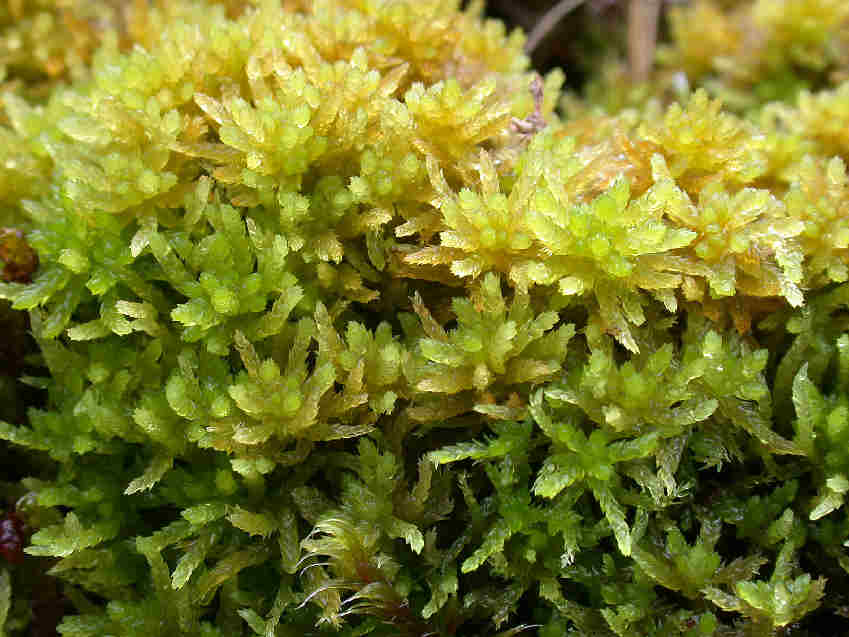
Scarce in vc1, where recorded only on open
heathland with low vegetation, on moist or wet, acidic peat
substrates, but sometimes on drier ground than our other
sphagna. At Chykembro Common seen in rather thinly or sparsely
vegetated areas on gentle slopes, apparently on recently burnt
ground. On several other heaths seen only in nearly flat areas
with low herbaceous vegetation. It is presumably lost from
heathland areas where lack of grazing or burning results in
the vegetation growing tall. In vc2 in short vegetation of
grassy edges of mires, in open places in mires along valley
bottoms, as minor component on hummocks in some mires, on
peaty banks in mires, on wet heath with short vegetation and
in open acidic flushes on hillsides. One record in open area
of wet heathy vegetation on old china-clay workings. Locally
plentiful on wet heathland at Retire Common. Associates
recorded include Calypogeia
muelleriana, Kurzia
pauciflora, Sphagnum
capillifolium, Calluna vulgaris, Drosera rotundifolia,
Erica tetralix and
Molinia
caerulea.
Frequent (or common ?) c.fr.: capsules immature 4,
5; dehisced 8.