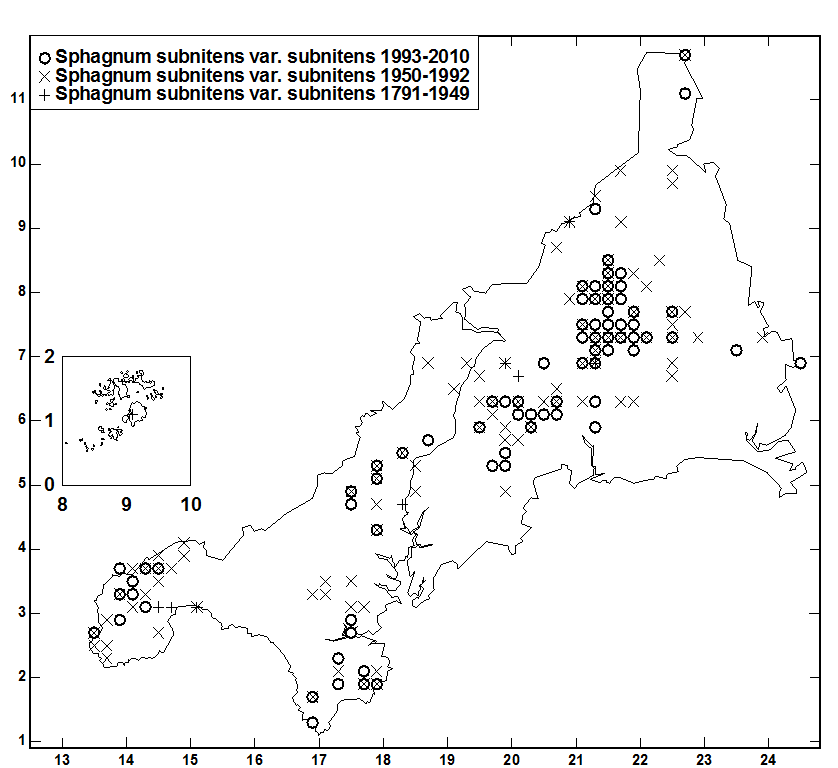
*1: Tremethick Moor,
1867, WC (PNZ) (Paton 1969a:
709).
*2: Hustyn Wood, 1873,
RVT (CMM) (Paton 1969a:
709).
One of our commonest sphagna and probably the most
tolerant among the common species of somewhat base-enriched
groundwater giving mesotrophic conditions. Occurs on wet, more
or less acidic, mainly peaty substrates, mostly in open or
lightly shaded places, where it typically forms low, pure
hummocks. Most records are from wet heaths or mires (where
usually associated with flushes and mainly absent from flat
areas of open oligotrophic mire); also recorded several times
on flushes on and above sea-cliffs, flushes on hillsides
inland, from wet heath on flushed valley side-slope, flush in
pasture, and in or near old and working china-clay quarries.
Associates recorded include Calypogeia fissa, Cephalozia
bicuspidata, Sphagnum denticulatum,
Sphagnum inundatum,
Sphagnum fallax, Sphagnum fimbriatum,
Sphagnum palustre,
Sphagnum
papillosum, Carex
caryophyllea, Erica
tetralix, Molinia
caerulea, Ulex
gallii; less often Aneura pinguis, Riccardia
chamedryfolia, Riccardia latifrons,
Carex echinata, Erica ciliaris, Juncus inflexus, Schoenus
nigricans.
Less typical records from wet ground in carrs of
Grey Willow, including well-grown Grey Willow scrub (which had
colonised former heaths; near Sphagnum fallax, Sphagnum palustre);
also at base of tall Molinia caerulea
tussocks in degenerating mire. With other sphagna in
flushes at edge of mire below old china-clay spoil
tips.
Commonly c.fr.: capsules dehiscing 6, 7; dehisced
7, 8.